


| Model | DXTECH-1325 | DX-C1390 CO2 |
| Working Area | 1300 × 2500 mm | 600x900mm, 1300mmx900mm |
| Table Type | Open | Enclosed |
| Laser Power | 130W, 150W, 180W, 220W, etc. | 80W, 100W, 130W, 150W, 180W, etc. |
| Laser Type | CO2 Sealed Laser Tube | CO2 Sealed Laser Tube |
| Cooling Method | Water cooling | Water cooling |
| Engraving Speed | 0–60,000 mm/min | 0–60,000 mm/min |
| Cutting Speed | 0–40,000 mm/min | 0–40,000 mm/min |
| Position Accuracy | ≤ 0.01mm | ≤ 0.01mm |
| Graphic Formats | DST, PLT, BMP, DXF, AI | DST, PLT, BMP, DXF, AI |
| Power Supply | 220V±10% 110V±10% | 220V±10% 110V±10% |
CO2 LASER ENGRAVING MACHINE MANUFACTURER
- Non‑contact processing with wide material compatibility
- Positioning accuracy up to ±0.01 mm with clean cutting edges
- Work areas: 600×900 mm, 1300×900 mm, 1300×2500 mm

Why Choose the DXTECH CO2 Laser Engraving Machine?
DXTECH, a professional laser equipment manufacturer, designs co2 laser engraving cutting machine capable of precisely cutting and engraving non-metallic materials and coated metals. With wide material compatibility, industrial-grade precision, and durable construction, these machines help companies optimize production processes and improve quality, making them widely used across industries such as signage, promotional materials, decorative arts, and industrial signage.
DXTECH
Our Products
DXTECH CO2 laser engraving machines primarily use a co2 gas laser source to generate an infrared laser beam, enabling the machine to cut and engrave most non-metallic materials. Depending on their structure, they can be divided into two main categories: environmentally friendly and safe enclosed CO2 laser engraving machines, and convenient open-type CO2 laser engraving machines.
DXTECH-1325
- Type: open
- Working Area: 1300*2500mm
- Laser Power: 130W, 150W, 180W, 220W, etc.
- Features: Large capacity, easy loading and unloading
DX-C1390 CO2
- Type: enclosed
- Working Area: 600x900mm, 1300mmx900mm
- Laser Power: 80W, 100W, 130W, 150W, 180W, etc.
- Features: high safety, excellent fume control
Features of the CO2 Laser Engraving Machine
A co2 laser engraving and cutting machine is characterized by high precision, broad applicability across various materials, smooth cutting edges, stable energy output, and ease of operation. They use the infrared wavelength of a CO2 laser to efficiently process non-metallic materials such as wood, acrylic, leather, and paper, producing fine engravings and clean-cut surfaces without the need for post-processing polishing. The equipment operates with low noise and is easy to maintain, making it suitable for various industries, including crafts, advertising, and packaging printing.

High-quality CO2 laser tube
Utilizing a water-cooled design and made of durable glass, it provides stable output power, long service life, and consistent cutting and engraving performance.

Rugged design
The robust welded frame and precision linear guides ensure durability and accuracy, allowing for complex designs.
Safety protection
The top access door automatically cuts off power when opened, protecting operators from laser-related injuries and enhancing safety.
Precise red dot positioning
Precise laser beam positioning is achieved using a red dot pointer, saving focus adjustment time and providing a clear display of laser position and working dimensions.
Safe and reliable
Non-contact processing ensures no damage to the surface of workpieces or material deformation during operation.
Low maintenance requirements
Simply replace with inexpensive replacement parts; easy to maintain; suitable for small-batch processing services.
Configuration of CO2 Laser Engraving Machine
CO2 Laser Engraving Head
The laser engraving head features a built-in imported optical focusing lens with a beam transmittance of up to 99.3%, 14% higher than ordinary lenses.
The machine supports autofocus, reducing manual focusing time; it also uses a red light indicator for precise laser positioning.
Send inquiry now High Performance CO2 Laser Tube
The CO2 laser engraver uses a high-quality glass tube body, offering approximately 40% higher laser power than ordinary tubes of the same length, and a lifespan of 18 months to 10 years.
It provides stable output power, maintains a uniform beam, and delivers high-quality processing results even during extended operation, and is suitable for various CO₂ laser cutting and engraving equipment.
Send inquiry now Multifunctional Worktable
The CO2 laser engraving machine is equipped with either a blade-type worktable or a honeycomb-type worktable, depending on your materials.
Blade-type worktable: for processing hard materials such as acrylic, wood, bamboo, and MDF.
Honeycomb-type worktable: suitable for soft materials such as leather, paper, fabrics, rubber, and cloth.
High precision motion control system
Utilizing top-tier linear guides and stepper motors, different vibration strategies are employed for low and medium speeds to ensure smoother engraving cuts.
The CO2 laser cutter motor driver supports full-speed output, features overvoltage and overcurrent protection, high torque, low heat generation, and high reliability.
Send inquiry nowAdvantages of Purchasing from DXTECH
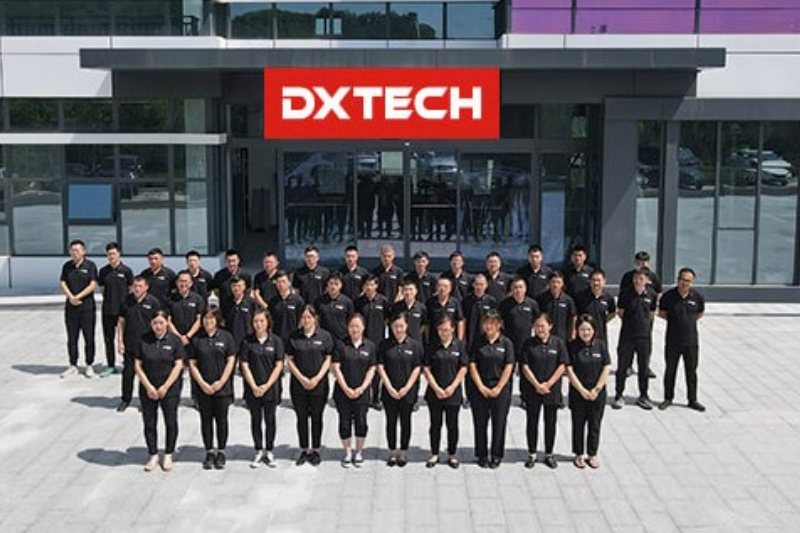

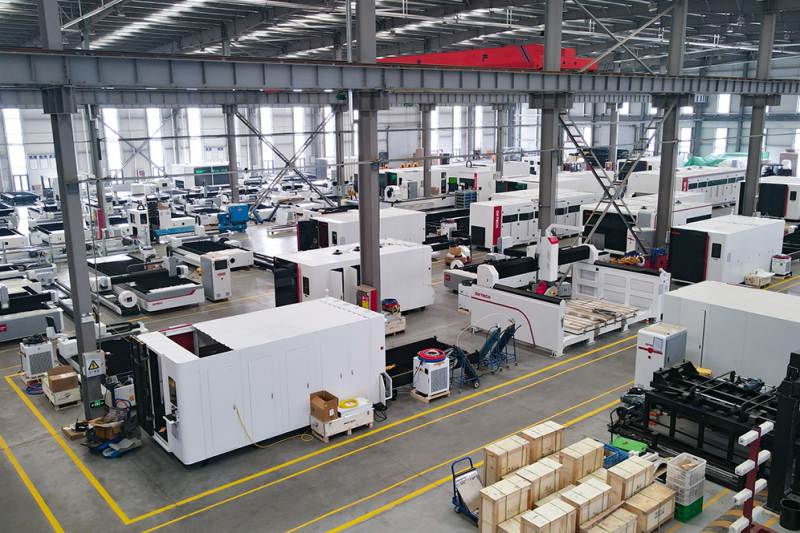

Self-built production lines, stable and reliable
DXTECH has three large-scale production bases, covering a total area of
Multiple equipment coverage, one-stop shopping
As a professional CO2 laser engraving machine supplier, DXTECH also provides a wide range of equipment required in the metal processing industry, including fiber laser cutting machines, laser welding machines, press brakes, and more, eliminating the need for customers to source from multiple suppliers. Our expert team can also recommend the most suitable equipment combinations based on specific application scenarios.
Global service, guaranteed quality
DXTECH holds over 120 national patents, exports its products to over 180 countries, and has obtained international quality certifications such as ISO, FDA, UL, and CE. All equipment undergoes rigorous testing before leaving the factory, is suitable for the processing needs of companies of different sizes, and is trusted by users worldwide.
More about CO2 laser engraving machine
Technical Specifications
| Model | DXTECH-1325 | DX-C1390 CO2 |
| Working Area | 1300*2500mm | 600x900mm, 1300mmx900mm |
| Table Type | Open | Enclosed |
| Laser Power | 130W, 150W, 180W, 220W, etc. | 80W, 100W, 130W, 150W, 180W, etc. |
| Laser Type | CO2 Sealed Laser Tube | CO2 Sealed Laser Tube |
| Cooling Method | Water cooling | Water cooling |
| Engraving Speed | 0–60,000 mm/min | 0–60,000 mm/min |
| Cutting Speed | 0–40,000 mm/min | 0–40,000 mm/min |
| Position Accuracy | ≤ 0.01mm | ≤ 0.01mm |
| Graphic Formats | DST, PLT, BMP, DXF, AI | DST, PLT, BMP, DXF, AI |
| Power Supply | 220V±10% 110V±10% | 220V±10% 110V±10% |
Sample
CO2 laser engravers primarily utilize CO2 laser cutting technology (CO2 laser beam) to precisely and aesthetically engrave and cut non-metallic materials. Applicable materials and industries include:
Materials: Wood, MDF, acrylic, plywood, PVC, two-color boards, leather, bamboo, rubber, marble, granite, ceramic tiles, fabric, wool, fur, plexiglass, plastics, resin, etc.
Industries: Clothing, leather goods, advertising decoration, architectural decoration, art, handicrafts, gifts, toys, paper products, acrylic products, medium-density fiberboard, precision cutting of non-metallic sheets, and other industries requiring high engraving precision.

Customer Reviews
Machine Feedback from a Saudi Arabian Customer
“I’ve been using this CO2 laser engraver machine for a while now, and its overall performance is really good. The engraving precision is high, and the lines are clean and crisp. It’s very convenient for our woodworking and acrylic projects. We seldom need to sand the cut edges, saving a lot of time. The machine is also quite quiet, working steadily for several hours straight, which is especially helpful for our small studio.”
Machine Feedback from a Colombian Customer
“The equipment was installed quickly after delivery, and the interface is easy to use. We mainly make advertising signs and some custom crafts. This CO2 laser cutter is very flexible in switching between different materials, has stable power, and is fast. Our order volume has increased significantly, and production efficiency has improved noticeably. Overall, this purchase was very worthwhile.”
Machine Feedback from a Kenyan Customer
“This laser engraving machine offers great value for money. It can handle our commonly used materials such as wood, leather, and bamboo, and the engraved details are very clear. The machine has a solid structure, and daily maintenance is not complicated. Our small workshop uses it every day, and its performance has been consistently stable. It’s perfect for users with limited budgets who need reliable equipment.”
Best CO2 Laser Machines by Application

Woodworking and Crafts
CO2 laser engraving machine for wood is widely used in the wood carving industry. They can perform deep and shallow engraving as well as complex texture engraving, producing clean edges. Suitable for making wooden signs, decorations, and other products.
Send inquiry now Acrylic and Advertising
CO2 acrylic laser cutting machines can cut acrylic materials with high transparency, producing smooth and clear edges. Commonly used for advertising billboards, light boards, and display boards.
Send inquiry now Leather Products
CO2 laser cutters can engrave, punch, and cut on leather, producing clear patterns that are not easily worn. Commonly used for making wallets, belts, keychains, and other products.
Send inquiry now Packaging, Printing, and Paper Products
CO2 laser engravers can perform fine cutting and engraving on paper, corrugated paper, etc., with high precision. And they are typically used for gift box packaging and paper sculptures.
Send inquiry now Textiles and Clothing
CO2 laser cutting machines can engrave, cut, and hollow out fabrics. The finished products are fine and do not have rough edges. Suitable for denim, leather, and synthetic fibers, and commonly used for clothing patterns and shoe uppers.
Send inquiry nowFAQ
As a CO2 laser engraving machine manufacturer, DXTECH is committed to providing excellent service and support! If you have any questions before purchasing, please feel free to leave a message.
Is the CO2 laser cutting machine difficult to operate?
The operation is relatively simple; most users can become proficient after a short training period. The software interface is intuitive and supports importing common graphic formats.
How often does the laser tube of a CO2 laser engraving machine need to be replaced?
Generally between 2–4 years, depending on power, usage intensity, and cooling conditions. High-quality laser tubes have a longer lifespan and slower decay.
How precise is the CO2 laser engraving machine?
The CO2 laser cutting and engraving machine boasts a positioning accuracy of up to ±0.01 mm, ensuring clean cutting edges and fine engraving details for both small and large batch production.
Is this machine suitable for industrial use?
Yes. This industrial CO2 laser cutting and engraving machine features a robust frame, a reliable motion system, and continuous operation capabilities, making it suitable for workshops, factories, and specialized production environments.
What else do you need to know about CO2 laser engraving machines?
I. How do different power levels affect engraving and cutting capabilities?
Power is one of the most crucial performance indicators of a CO2 laser engraving machine, directly determining the thickness of materials the machine can process, its speed, and the precision. Common power ranges include 40W, 60W, 80W, 100W, 130W, and 150W.
1. Differences in Power Requirements for Engraving vs. Cutting
- Engraving relies more on the laser spot’s fineness and energy control. 40–80W is sufficient for most engraving needs on wood, leather, acrylic, and rubber.
- Cutting: Requires higher energy to penetrate materials. 100W and above are more suitable for thicker plates or high-efficiency production.
2. Typical Applications of Different Power Ranges
- 40–60W: Lightweight engraving, thin wood cutting, handicrafts, small studios.
- 80–100W: Medium to thick plate cutting, advertising industry, customized gifts, mass production.
- 130–150W: For cutting thick wood and acrylic sheets (20mm and above), industrial-grade processing.
3. The Relationship Between Power and Beam Quality
Higher power is not always better. A higher power may result in a slightly larger beam, reducing engraving precision. Therefore:
- For high-precision engraving → Choose medium to low power + high-quality optical path
- For high-efficiency cutting → Choose high power + stable cooling system
II. Key Components Affecting Engraving Accuracy and Lifespan?
The optical path system of a CO2 laser engraver typically consists of a laser tube, a reflector, and a focusing lens, determining the stability, energy density, and engraving effect of the laser beam.
1. Types of Laser Tubes
- Glass laser tubes are the most common, offering high power, a relatively low price, and a lifespan of 1500-3000 hours.
- Metal RF laser tubes are suitable for high-end engraving, offering finer spot size, faster modulation speed, and a lifespan exceeding 10,000 hours, but at a higher cost.
2. Differences in Lens Materials
- K9 Lenses: Used in entry-level, economical equipment.
- ZnSe Lenses: Utilized in mid-to-high-end models, offering high light transmittance and good heat resistance.
- American II-VI Lenses: Recognized as a high-quality component, resulting in finer engraving and a longer lifespan.
3. The Importance of Optical Path Alignment
Optical path misalignment can lead to the following problems:
- Inconsistent engraving depth
- Inability to penetrate the cut
- Burning of the lens and shortened laser tube lifespan
Therefore, optical path alignment is one of the most critical technical aspects of a CO2 laser cutter.
III. How to Maintain Safety and Remove Fumes and Odors During the Processing of Different Materials?
Laser cutters and engraving machines generate significant amounts of fumes and odors when processing wood, leather, rubber, and acrylic. Therefore, a fume extraction system is an essential and indispensable component.
1. Why is a fume extraction system so important?
- Fume buildup reduces lens transmittance, affecting engraving quality. A fume extraction system helps protect the lens and laser head.
- Some materials (such as PVC) produce harmful gases. A fume extraction system protects the health of operators.
- Timely removal of fumes allows for more concentrated laser energy, improving processing efficiency.
2. Common Fume Extraction Methods
- Dual Exhaust: Fumes are exhausted outdoors using a fan. This method is low-cost but requires ductwork.
- Air Purifier: Air is purified using activated carbon + HEPA + multi-stage filtration. Suitable for indoor office environments.
3. Precautions for Fume Extraction of Different Materials
- Wood: Produces a large amount of smoke, requiring a powerful fan.
- Acrylic: Strong odor; activated carbon filtration is recommended.
- Leather: May produce an irritating odor; a filtration system is essential.
- PVC processing is prohibited: It produces chlorine gas, which corrodes equipment and is harmful to health.
IV. Air Cooling vs. Water Cooling: How to Choose a Cooler?
The cooling system is a crucial component of a CO2 laser cutter, directly impacting the laser tube’s lifespan, output stability, and processing quality. CO2 laser tubes continuously generate significant heat during operation. Insufficient heat dissipation can lead to decreased laser energy and even laser tube explosion. Therefore, choosing the appropriate cooling method is paramount for equipment operation.
1. Air Cooling
Air cooling relies on fans or air circulation to remove heat. It has a simple structure and low cost, but its heat dissipation capacity is limited. It is typically suitable for low-power laser machines (40W-50W). Its slow heat dissipation makes it unsuitable for prolonged continuous processing. Furthermore, it is highly susceptible to environmental factors, easily overheating in summer, and is generally suitable for small workshops such as those for handicrafts.
Air cooling offers advantages such as low price and simple maintenance, but its heat dissipation capacity is far from sufficient for medium- to high-power laser tubes.
2. Water Cooling
Water cooling is the most widely used and reliable cooling method for CO2 laser machines. It uses circulating water to remove heat from the laser tube, offering high and stable cooling efficiency. Its cooling efficiency is far superior to air cooling, resulting in stable laser output, excellent processing effects, and significantly extended laser tube lifespan. It is suitable for medium-to-high-power machines with power ratings of 60W-150W and above.
3. Chiller Selection Guide
As an upgrade to water-cooling systems, chillers offer automatic temperature control and circulating filtration, making them the primary choice for professional users.
When selecting a chiller, consider the following factors:
- Cooling capacity: Higher power results in stronger cooling.
- Temperature control accuracy: High-end models can maintain a temperature difference of ±0.3°C.
- Water tank capacity: A larger capacity ensures a more stable temperature.
- Ambient temperature: Chillers are more necessary in areas with high summer temperatures.
4. Cooling Water and Usage Precautions
- It is recommended to use purified or distilled water to avoid scale buildup in the pipes.
- Antifreeze should be added in winter to prevent the laser tube from freezing and cracking.
- Change the cooling water regularly to maintain water quality.
- The chiller should be placed in a well-ventilated location to prevent heat buildup.

Contact for Latest Catalog and Price